We interviewed former Professor Iga with the following 4 questions (as Part 2):
This interview took place on April 16th, 2026.
The smallest laser everywhere used :
Vertical Cavity Surface Emitting Laser (VCSEL)
Q5: Throughout the development of VCSEL and related technologies, you must have faced many challenges. Could you share a memorable episode from that journey?
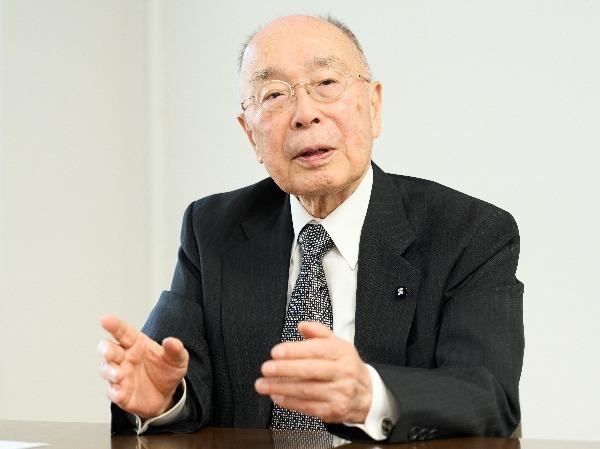
Yes, I had a big problem.
At the time of earlier stage of VCSEL research, one of the biggest difficulties was determining whether the underlying principle was correct or whether our technology was simply immature. The theoretical estimation made carefully was right on the edge—something like a 51-to-49 probability.
Neither we nor anyone else in the world have the necessary technology yet. For conventional electronic devices or lasers, you could simply draw up a design and ask a manufacturer to produce it. But for this laser, there was no company that could do that. We had to build the technology ourselves from scratch.
The challenge was identifying where the limits were, how far technology had advanced and where the critical threshold lay. Techniques such as MOCVD were gradually improving, but we had to determine everything experimentally. Breaking through that uncertainty was the greatest difficulty we faced. At the same time, technological progress is not driven by individual effort alone—societal revolutions play a significant role as well.
In 1989, just after we achieved continuous operation at room temperature in 1988, I visited Professor Isamu Akasaki’s laboratory in Nagoya University. Professor Akasaki, the mentor of Professor Amano, had left Matsushita Electric and was persistently working on blue LEDs at Nagoya University. At that time, magnesium(Mg) doping had begun to produce promising results for blue LEDs.
I once remarked to him, “Our VCSELs operate in the infrared and are invisible, but your blue LEDs are visible, which is wonderful. If p-type doping of AlN becomes possible, it would be remarkable.” Professor Akasaki remembered that comment and would often bring it up whenever we met. Later, p-type doping of AlGaN was indeed achieved.
That same year, the Berlin Wall fell down. During the Cold War, both the United States and the Soviet Union had invested heavily into military technologies, such as using X-ray lasers for missile defense. But with the end of East–West confrontation, military budgets did not find the way to go. In the United States, funding began to flow into universities and private industries through agencies like DARPA.
VCSEL fits well into these innovation-focused funding programs. Three photonics centers were made including UC Santa Barbara, MIT, and UNC Charlotte as core schools. As a result, large scale cleanrooms were established in many optoelectronics laboratories across the United States. In this way, drastic social changes significantly accelerated technological innovations.
From there, progress began to accelerate. In the 1990s, companies such as Honeywell started developing VCSELs, although the early devices were still limited by short lifetimes. By the end of the decade, these limitations had been addressed. Meanwhile, the internet was beginning to emerge. IBM sought to enter telecommunications, while Bell Labs focused on computing. Due to antitrust issues, Bell Labs was eventually divided. IBM, which was effective in lobbying, expanded into communications.
Initially, infrared lasers developed for CDs were used in LAN systems, but their lifespan was limited due to oxidation. While a CD player only required about 8,000 hours of lifetime, optical communication demanded up to one million hours. Conventional CD lasers could not satisfy this requirement.
VCSEL solved this problem. Unlike conventional edge-emitting lasers, where the active region is exposed, VCSEL are structurally enclosed—like a filled bun—preventing oxidation of the active region. IBM began adopting them for LAN systems, leading to large-scale production in many eindustries. After the year 2000, the internet exhibited a major turning point in global information and communication. From then, VCSELs were widely applied to the light sorces of LAN for nternet.
Around that time, Hewlett-Packard split into HP and Agilent. HP’s core strengths optics systems and spectroscopy. In Agilent, a few engineers who lefte HP developed the computer mouse, which became phenomenally successful. Gary Gordon, Michael J. Brosnan, Derek Knee, and Rajeev Badyal were those who worked on it. Th first commercial VCSEL mouse appeared in 2004 as Logitech MX1000 that claimed 20 times of tracking power from convetional LED devices.
Over a ten-year period, 1.1 billion units were sold. Although blue LED-based mice later dominated the market, Apple’s Magic Mouse and more precision Logitech devices still use surface-emitting lasers.
In Japan, Fuji Xerox developed large-scale laser printers using VCSEL arrays as the light source, through joint research with the Tokyo Institute of Technology. Before this, with the technical advice from Prof. Fumio Koyama they succeeded to realize a high power single transverse mode VCSEL employing a metal aperture configuration to eliminate higher order modes. The made one lane of VCSEL arrays consisting of 1024 chips of VCSELs emitting over one watts of continuous power out put. But it was far to scale up for laser printers and the project was just about stopping. I and Koyama wrote a letter to Mr. Youtaro Kobayashi, president of Fuji Xerox Company to continue by preserving a few people to maintain the accumulated technology to find a way to realize in sone other ways. A few years later, the machine utilizing 4-lanes and 8-colums 2D array VCSELs and mechanical scanning method.
This marked the first practical laser printer based on this technology. Other companies, such as Ricoh and Canon, also contributed to commercialization of VCSEL printers. Today, with on-demand printing, books can even be produced instantly using high-speed VCSEL laser printers.
Q6: In today's rapidly changing world, what do you believe is most important for researchers and engineers to succeed and create meaningful innovation?
We now live in a complex era—marked by geopolitical conflicts, tariffs, environmental issues, massive data centers, and AI. Past success stories do not necessarily apply today. It is difficult to give definitive advice. If someone from an older generation speaks, it is easy for younger people to say, “That’s outdated.”
However, the use of AI is unavoidable. A senior colleague of mine, Mr. Ryozo Kimihira, who lives in Hawaii, once told me that AI should be used for “heavy labor.” Tasks that are well understood but time-consuming are best managed by AI.
On the other hand, humans still must take part in thinking independently and creating something new. AI should not replace that.
It is problematic to use AI for generating data, conducting experiments, drafting papers entirely on its own. Even in creative fields, such as authoring novels, full reliance on AI raises concerns. On the other hand, in education and research areas for example, AI should use as as assistant, not replace human effort—otherwise, one’s own capabilities will decline.
It is my thought from the above discussions that senior generation should use AI for the purpose of updating the professional background and doing some self-brainstorming. Then we, old ones, will not be kicked out from the world.
Regardless of the field, fundamental principles are essential. In lasers, the foundation lies in electromagnetism and quantum mechanics. Mathematics is equally important. For example, in the gas industry, one must understand what molecules and atoms are and why oxidation occurs. Electrons play a vital role, and this requires an understanding of quantum mechanics.
For young researchers—and especially for those who will lead development and management in the future, a strong grounding in fundamentals is indispensable.
I would also mention a practical philosophy. In my book “When VCSEL Shine,” I describe “15 Rules for Seizing Opportunities.” One of them is: “Thorough preparation, no regret.”
Prepare meticulously for everything you do—and even if things do not go well, do not dwell on it. If you have done your best, that is enough.
Q7: Regarding work-life balance, how did you spend your time away from work during your active career?
To be honest, I never really had a sense of “off.” During my active years, I ate five meals a day, often with my students—even late at night (laughs).
I have also played the double bass since my fourth year of university in 1959—now for over 60 years. I continue performing in orchestras to this day. Just last week, we performed Tchaikovsky’s Pathétique Symphony.
-Did music have a positive effect on your research?
Music does not directly influence science—they are different domains. However, playing in an orchestra is beneficial for one’s overall well-being. It engages both the analytical and emotional aspects of the mind. In an orchestra, you must follow the conductor, which teaches patience and discipline (laughs).
-You have also authored books about music. How do you manage your time?
Whatever you do, the key is to make it a habit.
When I was a student, the orchestra practiced on Monday and Thursday evenings. I would inform my supervisor in advance that I would be away from the laboratory during those hours. Later, when I joined a community orchestra as a working adult, rehearsals were on Saturday nights, so I would likewise let people know ahead of time that I would be unavailable then.
Currently, I am a member of the Machida Philharmonic Orchestra, where I have served twice as chair of the management committee. Rehearsals are held every Sunday morning—week after week. It is much like how Christians go to church regularly. I also started golfing as my mentor Professor Suematsu encouraged me (my score was just over 80). His own mentor, Professor Kiyoshi Morita, began golfing at the age of 60 and continued to enjoy the sport until he was 94 or 95, living to the age of 104.
In South Korea, some military units even own golf courses. Because of conscription and the emphasis on building physical strength, soldiers run while carrying golf bags as a training. I also played golf during my time at Bell Labs. A golf course was reserved every Thursday from 5:00 p.m., and it was very affordable, around five dollars. We would wrap up work at 5:00 and play nine holes every week during the summer. Among colleagues, we would even compete to determine a winner. When someone was away on a business trip, there was a substitute list so that another person could participate in their place. Sometimes I was also asked to fill in as well.
Golf is an excellent way to relieve stress during your time off. That said, if you do not play well, it can leave you reflecting on your performance—or even feeling disappointed (laughs).
Q8: Finally, what advice or expectations would you share with MOCVD equipment manufacturers as they continue to support innovation in the semiconductor industry?
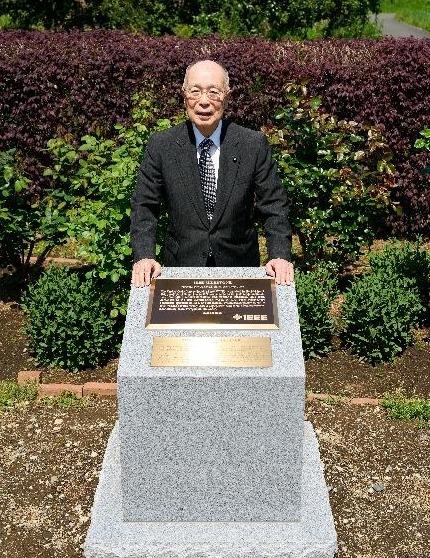
For VCSEL, production is currently centered on GaAs substrates. Using 6-to-8-inch wafers, up to one million devices can be produced at once. Manufacturing facilities resemble gymnasiums, filled with rows of MOCVD systems operating continuously. Production has been steadily increasing, especially with the rapid growth of data centers.
In addition to mass production systems, there are also research-scale epitaxial tools and specialized “epi-houses” that produce small quantities of customized wafers. Regions such as Taiwan have developed both large-scale manufacturing and advanced research infrastructure.
Future applications include not only GaAs but also materials like GaN and InP for longer wavelengths, which are important for sensing technologies.
For example:
• Optical coherence tomography (OCT) for retinal imaging
• Non-invasive medical diagnostics
• Infrared sensing technologies
Second-generation OCT systems incorporating VCSEL are already commercialized, enabling faster and more precise measurements.
There is also growing interest in micro-LEDs, infrared LEDs, and semiconductor-based quantum computing devices. In all these areas, MOCVD will continue to play a vital role.
Prof. Yasuharu Suematsu gave me advice to persue the research and Prof. Hiroshi Kukimoto helped me to build up an MOCVD apparatus. These achievements which I have been talking about are due to the efforts of team members including graduate students and visiting researchers from industiries. Also, I received finalcial supports from many companies to my research. I like to express my thanks to all of them.
For products related to this interview, please check this page.
Products & Materials
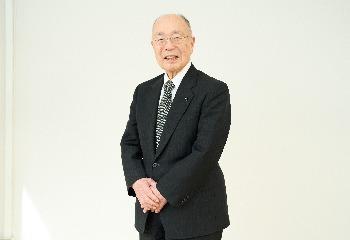
Kenichi Iga
Kenichi Iga received his B.E. in Electrical Engineering from the Tokyo Institute of Technology in 1963 and his Ph.D. in Engineering from the same institution in 1968. He served as President of the Tokyo Institute of Technology from 2007 to 2012. He has also held prominent leadership roles, including President of the Institute of Electronics, Information and Communication Engineers (IEICE) and Executive Director of the Japan Society for the Promotion of Science (JSPS).
Professor Iga is known as the inventor of the Vertical Cavity Surface Emitting Laser (VCSEL), which is widely used as a light source in high-speed data communications. His work has laid the foundation for optical interconnect technologies on the Internet and data centers, as well as for the broader field of optoelectronics. He was awarded the IEEE Edison Medal in 2021, named a Person of Cultural Merit (Japan) in 2022, and recognized with an IEEE Milestone in 2025. After those recognition, He received Okawa Prize in 2025, Honda Prize in 2025, and The Japan Academy Prize in 2026.
2.16.1.2
2.16.1.2
2.16.1.2
2.16.1.2
2.16.1.2
2.16.1.2
2.16.1.2
2.16.1.2
2.16.1.2
2.16.1.2